

Allergy-Safe Cleaning for Families: A Gentle, Evidence-Based Guide for Homes With Kids and Pets
Published on: | By Maid Cleaning Nashville
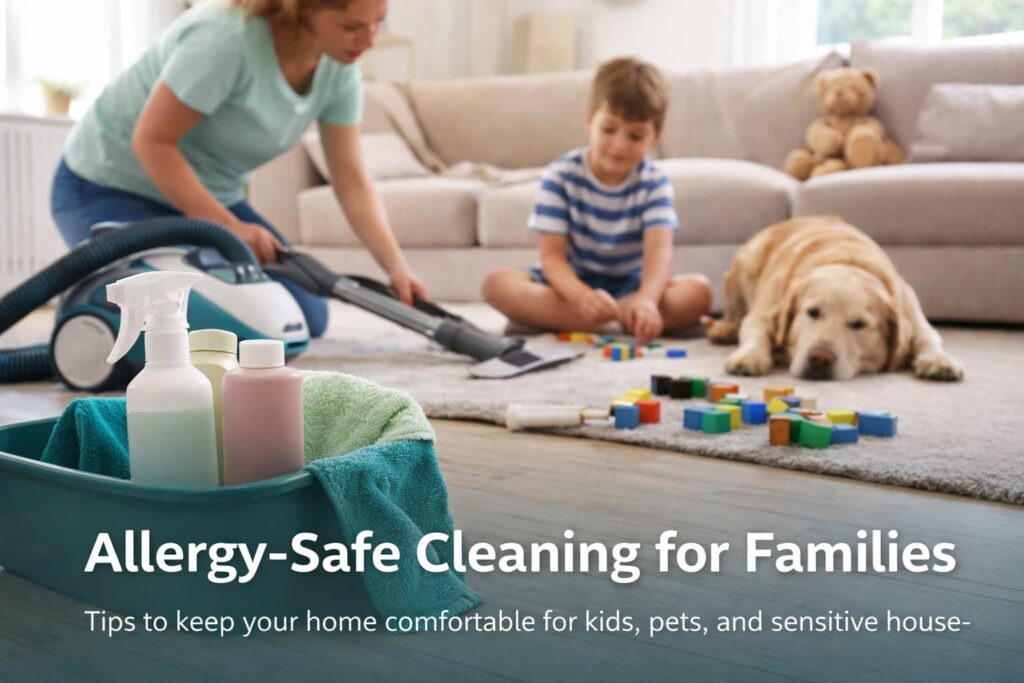
If allergies show up in your home as sneezing, congestion, itchy eyes, or “we’re fine outside but not inside,” you’re not imagining it. A house can look clean and still feel uncomfortable. The good news: you don’t need harsh chemicals or perfection. You need the right habits (done consistently) that reduce allergen load and keep the air calmer for everyone.
What “Allergy-Safe Cleaning” Actually Means
Allergy-safe cleaning is less about “extra cleaning” and more about cleaning the right things in the right way. In most homes, symptoms are triggered by a mix of:
- Dust mites (especially in bedding, carpets, upholstered furniture, stuffed toys)
- Pet dander that settles on couches, rugs, and blankets
- Pollen tracked in on shoes, backpacks, and paws
- Mold spores supported by moisture (bathrooms, kitchens, laundry areas)
- VOCs and irritants from fragranced products and certain cleaners
The goal is to reduce the total “allergen load” in the home so your body isn’t fighting a low-grade battle every day.
The #1 Mistake: Using “Stronger” Products to Feel More In Control
It’s completely understandable: when someone is sneezing or congested, the instinct is to reach for the strongest thing in the cabinet. But for allergy-prone households—especially families—strong fragrance and harsh chemical residues can irritate airways and skin.
A better direction is simple: fragrance-free, low-VOC products and methods that capture particles instead of stirring them up. The EPA notes that many volatile organic compounds (VOCs) can be higher indoors than outdoors and come from a range of household products. That’s a real reason to keep “clean smell” from becoming part of your cleaning strategy. (EPA: VOCs and indoor air quality)
Friendly rule of thumb: If a product makes someone cough, sneeze, get a headache, or feel tight-chested, it’s not “allergy-safe” for your household—even if the label says “natural.”
The Non-Negotiables (That Still Feel Doable in a Busy House)
1) Dust: Capture it, don’t spread it
Dust is not just “dust.” It can carry dander, pollen, skin flakes, and other particles that trigger symptoms. The technique matters:
- Use microfiber cloths (they trap particles better than many traditional rags).
- Dust top to bottom so you’re not recontaminating lower surfaces.
- Avoid feather dusters or dry sweeping—both tend to send particles airborne.
If you’re short on time, focus on what kids touch: coffee table, side tables, window sills, and the couch arms.
2) Vacuuming: HEPA (and slow) makes the difference
Many households vacuum regularly and still see allergies persist—because the vacuum’s filtration doesn’t keep particles contained. For allergy-safe cleaning, look for a vacuum that’s sealed and uses HEPA filtration, then vacuum slowly.
- Prioritize rugs, carpet edges, baseboards, and upholstery seams.
- Go slowly. Fast vacuuming can kick particles up rather than remove them effectively.
- If someone in the home is highly sensitive, consider wearing a mask while vacuuming (it’s not dramatic—just practical).
The American Academy of Allergy, Asthma & Immunology (AAAAI) includes detailed cleaning tips for allergy and asthma sufferers, including strategies to reduce exposure during cleaning. (AAAAI: Cleaning tips for allergy & asthma sufferers)
3) Bedrooms: the highest ROI room in the house
If your family wakes up congested, the bedroom is usually the first place to tighten up. AAAAI guidance on indoor allergens emphasizes encasing mattresses/pillows and washing bedding weekly in hot water. (AAAAI: Indoor allergens)
Bedroom routine that’s realistic for families
- Weekly: Wash sheets and pillowcases (hot water when the fabric allows).
- Monthly: Vacuum mattress surface (slowly) and wipe nightstands, headboards, lamps.
- Seasonally: Rotate and wash/clean comforters and pillows as care labels allow.
- Ongoing: Use allergen-proof encasements for mattresses and pillows.
If you have kids with stuffed animals: keep a smaller “sleeping set,” and rotate/wash the rest. Several allergy organizations recommend limiting stuffed animals in the bedroom or washing them regularly. (ACAAI: Environmental allergy avoidance)
If You Have Kids: Focus on What They Touch (and Where They Play)
Kids live closer to the ground. They build forts, roll on rugs, and sit on floors while snacking. So for families, allergy-safe cleaning is less about polishing and more about:
- Floors (especially rugs and high-traffic areas)
- Soft surfaces (couches, pillows, throw blankets)
- Bedrooms (bedding, stuffed animals, curtains)
Practical change that helps many households: a “shoes off” habit near the entry. It reduces pollen and outdoor particles tracked into the home.
If You Have Pets: Clean the Zones, Not the Pet
Pets are family. And you usually don’t need extreme measures to feel better. What helps most is reducing the buildup of dander where pets rest and where kids cuddle them.
Pet-zone playbook
- Wash pet bedding weekly.
- Vacuum the couch and pet favorite spots (slowly, with HEPA).
- Use damp microfiber on hard floors near feeding stations.
- Brush pets regularly (ideally outdoors).
What usually backfires
- Overusing scented sprays to “neutralize” odors (often irritates airways).
- Dry sweeping pet hair (turns hair/dander into airborne particles).
- Bathing pets too often (can irritate their skin and doesn’t solve surfaces).
Mold and Moisture: The Root Cause Is Almost Always Water
Mold tends to be a “bathroom/kitchen/laundry” story—not a “we didn’t scrub hard enough” story. Moisture creates the conditions for mold to grow.
The CDC recommends keeping humidity levels low (generally no higher than 50%) and fixing leaks to prevent mold. (CDC: Mold health & prevention)
The EPA similarly notes keeping indoor humidity ideally between 30% and 50% and addressing condensation quickly. (EPA: Mold, moisture & your home)
Simple moisture routine: run the bathroom fan during showers (and for a bit after), wipe wet surfaces when needed, and address leaks immediately. In allergy-safe homes, moisture is treated like a “maintenance issue,” not a “cleaning issue.”
A Family-Friendly Allergy-Safe Cleaning Schedule
Consistency beats intensity. Here’s a schedule that’s effective without taking over your life:
| Frequency | What to do | Why it helps |
|---|---|---|
| Weekly | Floors (vacuum + mop), bathrooms, bedding, quick dust of “touch surfaces” | Keeps allergen load from building up where kids and pets live. |
| Every 1–2 weeks | Thorough dusting (microfiber), upholstery vacuuming, baseboard edges | Captures dander and dust before it becomes a “constant in the air.” |
| Monthly | Mattress surface vacuum, wipe vents/grilles, wash throws/pet blankets | Bedrooms and soft textiles are major reservoirs for mites and dander. |
| Seasonally | Deep clean baseboards, behind furniture, inside window tracks; reassess humidity | Reduces “hidden buildup” and keeps moisture issues from becoming mold issues. |
What About “Natural” Products?
This is one of the most important (and misunderstood) parts of allergy-safe cleaning: “Natural” doesn’t automatically mean “non-irritating.”
- Essential oils can trigger reactions for some people.
- Vinegar fumes can irritate sensitive airways.
- Baking soda helps odors, but it doesn’t remove allergens by itself.
Allergy-safe is about tolerability: fewer irritants in the air, fewer residues on surfaces, and better particle capture.
FAQ: The Questions Families Ask Most
Should I disinfect everything if allergies are bad?
Usually, no. Allergies are most often driven by allergens (dust mites, dander, pollen, mold) rather than everyday surface bacteria. In many homes, focusing on HEPA vacuuming, bedroom routines, and moisture control gives more relief than constant disinfecting.
Do air fresheners help?
They typically mask odors and can add irritants. If you want the home to feel fresher, focus on removing particles (HEPA vacuuming), laundering textiles, and ventilation rather than adding fragrance. The EPA’s indoor air quality resources are a good baseline for thinking about indoor pollutants. (EPA: Indoor Air Quality overview)
What’s the best first step if we’re overwhelmed?
Start with the bedroom: encase mattress/pillows + wash bedding weekly + vacuum the floor thoroughly. Many allergy organizations highlight bedroom controls because of how much time we spend there. (AAAAI: Indoor allergens)
We have kids and pets. Is this even realistic?
Yes—if you treat it like a routine, not a project. Allergy-safe cleaning works best when it’s predictable: a weekly “reset,” small daily habits (shoes off, quick wipe of pet zones), and seasonal deep cleaning.
References (Trusted, Practical Sources)
- EPA — Volatile Organic Compounds’ Impact on Indoor Air Quality: https://www.epa.gov/indoor-air-quality-iaq/volatile-organic-compounds-impact-indoor-air-quality
- EPA — A Brief Guide to Mold, Moisture and Your Home: https://www.epa.gov/mold/brief-guide-mold-moisture-and-your-home
- CDC — Mold (Health & Prevention): https://www.cdc.gov/mold-health/about/index.html
- AAAAI — Indoor Allergens: https://www.aaaai.org/tools-for-the-public/conditions-library/allergies/indoor-allergens-ttr
- AAAAI — Cleaning Tips for Allergy and Asthma Sufferers: https://www.aaaai.org/tools-for-the-public/conditions-library/allergies/cleaning-tips-for-allergy-and-asthma-sufferers
- ACAAI — Environmental Allergy Avoidance: https://acaai.org/allergies/management-treatment/living-with-allergies/environmental-allergy-avoidance/
Jenny is the lead writer and brand ambassador for Maid Cleaning Nashville. She’s a Nashville-based expert in premium home cleaning, organization, wellness-focused home care, and lifestyle optimization. Jenny creates research-driven, SEO-optimized content to help families and professionals make smarter decisions about their homes.